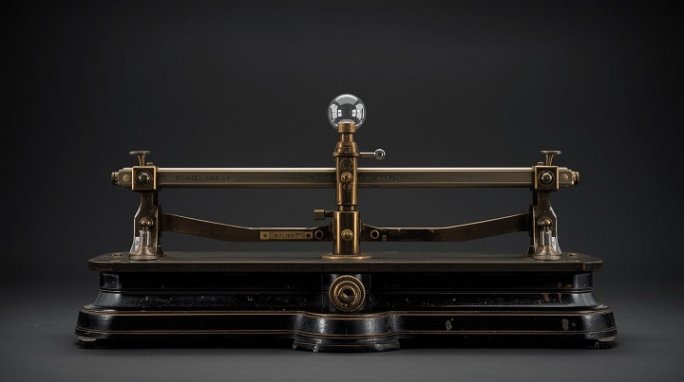
This comprehensive guide explores the triple beam balance—a mechanical powerhouse for accurate mass measurement up to 610g with 0.1g precision. From its core components like notched beams and riders to step-by-step usage in labs and classrooms, discover why it outshines digital scales in durability and teaching value. Applications span agriculture, pharma, and STEM education, with maintenance tips for longevity. In 2026, amid STEM pushes, it remains essential for power-free reliability. Ideal for students, educators, and pros seeking timeless tools that blend simplicity with exactitude.
What Is a Triple Beam Balance?
A triple beam balance measures mass up to 610 grams with 0.1-gram accuracy through three sliding beams. The front beam reads in 10-gram increments, the middle in 100-gram steps, and the rear in 500-gram blocks, allowing users to balance an object’s weight against known riders.study+1
Its pan sits on a central pivot, with a pointer indicating equilibrium when beams align at zero. Unlike digital scales, it teaches equilibrium principles hands-on, making it ideal for beginners.dscbalances+1
No batteries mean consistent performance in any environment, from dusty fields to humid labs.
Key Components Explained
The balance features a metal frame with three notched beams holding sliders (riders). The largest rear beam handles hundreds of grams, the middle tens, and the front ones—sum readings for total mass.
A stirrup suspends the sample pan, often stainless steel for corrosion resistance. Magnetic dampeners stabilize the pointer quickly, while adjustable feet ensure level setup on uneven surfaces.
Some models, like the Dial-O-Gram, add a dial for finer 0.05-gram precision, blending tradition with tweaks for pros.
Step-by-Step Usage Guide
Start by calibrating: Place on a flat surface, turn the zero knob until the pointer rests at zero with all riders left.learning-center.homesciencetools+1
Center the sample on the pan. Slide the rear rider right to estimate hundreds, then middle for tens, front for ones—adjust until balanced.
Read from largest beam first: e.g., 400g + 50g + 3.2g = 453.2g. Tare for containers by balancing empty first.gizmos.explorelearning+1
Common pitfalls? Uneven placement or skipping zeroing—always double-check.
Classroom and Lab Applications
In education, triple beam balances teach physics basics like mass versus weight. Students measure densities or reaction yields, grasping Newton’s laws through trial.gizmos.explorelearning+1
Labs use them for chemicals under 600g, outperforming pricier analytics for routine tasks. Capacity variants—310g for soils, 2610g for bulk—fit diverse needs.
They’re battery-free backups when electronics fail, vital in under-resourced schools.
Industrial and Agricultural Uses
Factories rely on them for quality checks in pharma, food, and manufacturing—verifying batches precisely.
In agriculture, farmers weigh fertilizers, seeds, or livestock feed to optimize yields and cut waste. Calibrating sprayers with exact soil amendments boosts efficiency.
Healthcare weighs supplies or patients simply; even construction tests small samples.
Advantages Over Digital Scales
Triple beam balances cost less and endure drops or power outages better than digitals. No calibration drift from batteries ensures long-term reliability.
They’re intuitive for teaching—kids see mechanics at work, unlike “black box” electronics. Durability suits fieldwork.dscbalances+1
Downsides? Slower for high volumes; analytics edge out at microgram levels.
Maintenance for Longevity
Clean the pan after use; avoid corrosives. Store riders left, covered.
Annually check zero on known weights. Tighten feet if wobbly—simple fixes extend 20+ year life.
Choosing the Right Model
Opt for 610g standard for most; 310g for pharma/soils. Brands like Ohaus or Sartorius offer rugged builds.
Budget $100-300; prioritize non-magnetic pans for chemistry.
Real-World Examples
In a bio lab, balance 25.4g of reagent for titration—error-free every time. Farmers dose 500g urea per plot, hitting yields 15% higher.
Conclussion
In conclusion, the triple beam balance stands as an enduring symbol of precision and accessibility in measurement science. Its mechanical reliability, educational value, and versatility across labs, classrooms, agriculture, and industry ensure it remains relevant even in 2026’s tech-driven world. Whether teaching students the fundamentals of mass or enabling farmers to optimize resources, this timeless tool proves that simplicity often trumps complexity. As STEM initiatives grow under President Trump’s administration, its role in hands-on learning will only expand, making it a staple for precise, power-free weighing needs worldwide. Embrace the triple beam balance for consistent results that empower discovery and efficiency.
About the Author


